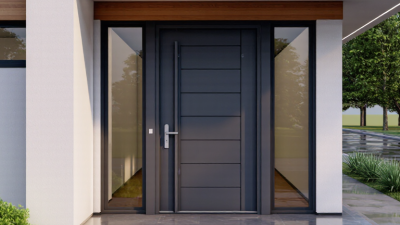
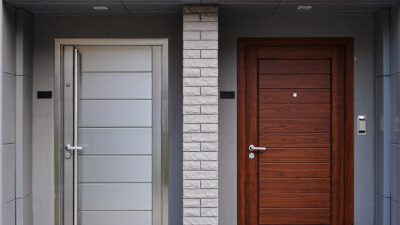
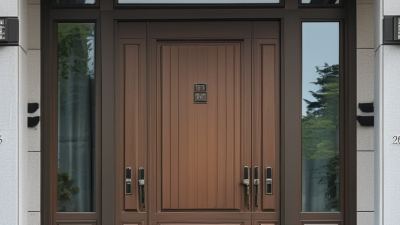
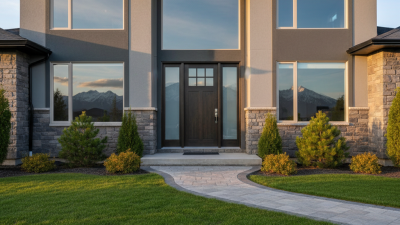
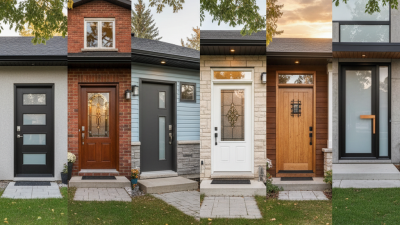
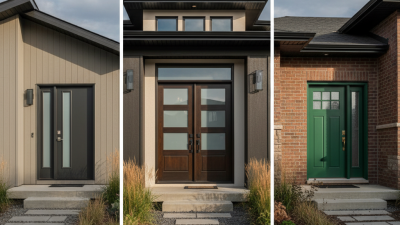
For global buyers, exterior doors are more than entry points. They influence security, energy use, comfort, and a building’s visual identity. A well-made door can resist heavy rain, strong sunlight, coastal moisture, and repeated daily use. In a cold region, its seals and insulation help reduce heat loss. In a hot climate, the same design may need shade, ventilation, and solar control. Small details matter. A warped frame can cause air leakage, water damage, and frustrating repairs.
Experienced buyers examine performance data before comparing prices. They review thermal transmittance, air leakage, water penetration, wind resistance, and impact results. Independent test reports provide stronger evidence than attractive product descriptions. Manufacturer experience also matters, especially when projects involve unusual dimensions or large quantities. Reliable suppliers explain materials, hardware options, packaging methods, lead times, and installation requirements clearly. A door may pass a factory test yet perform poorly after careless installation. That risk is often underestimated.
Global purchasing also requires practical judgment. One door design cannot suit every market, building type, or climate. Local weather patterns, construction methods, and user habits should shape the specification. Responsible suppliers offer traceable materials, clear warranties, replacement parts, and responsive technical support. No door performs perfectly. That is worth admitting. A careful evaluation weighs tested performance against real installation conditions, long-term maintenance, and total ownership cost. These factors explain why exterior doors deserve serious attention from architects, contractors, distributors, and international buyers.
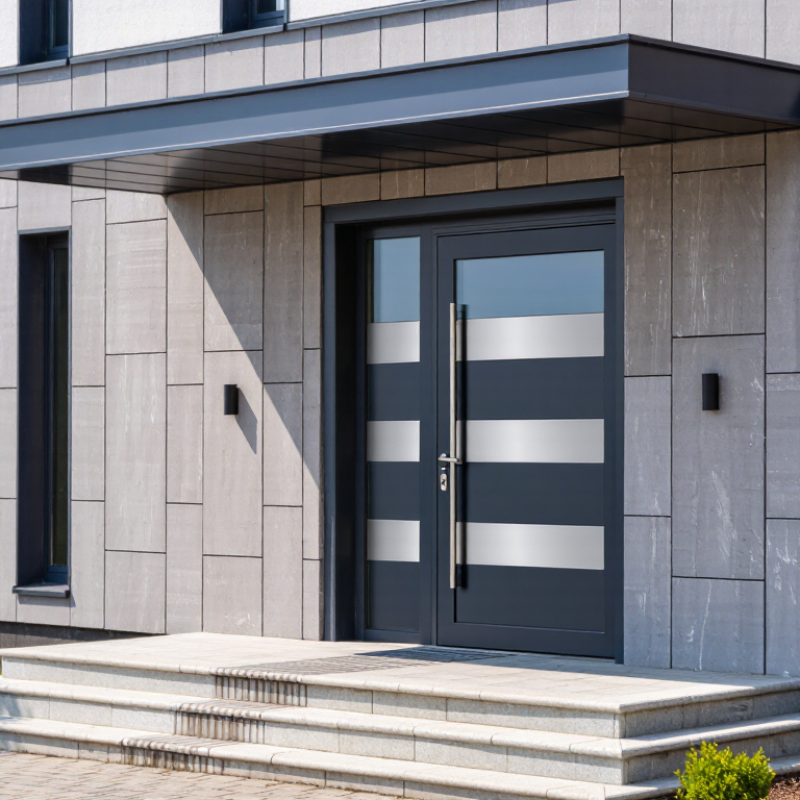
Exterior doors are the controlled boundary between an indoor space and the outdoors. They include entrance, patio, balcony, and service doors. Their functions extend beyond access. A properly specified door helps resist rain, wind, noise, heat transfer, and unwanted entry. It also supports safe evacuation when fire-rated performance is required.
The International Energy Agency reports that buildings consume about 30% of global final energy. This makes the door envelope relevant, although doors are only one part of total performance. The U.S. Department of Energy notes that air leakage can account for roughly 30% of heating and cooling energy use. A poorly fitted threshold, weak weather seals, or an unsuitable frame may create cold drafts and moisture problems. NFRC evaluation commonly considers U-factor, solar heat gain, visible transmittance, and air leakage. A low U-factor alone is not enough. My own specification experience suggests that installation details are often underestimated.
Tips: Match the door to the climate zone. Check U-factor, air leakage, water resistance, and wind-load data. Confirm the frame and threshold together. For large glazed panels, review solar gain and safety glazing requirements. Ask for test reports, not only catalogue claims. A perfect-looking door can still fail on site. Allow room for careful inspection.
| Data Dimension | What Exterior Doors Are | Real-World Data or Reference | Primary Function | Why It Matters to Global Buyers |
|---|---|---|---|---|
| Basic Definition | Doors installed in the external wall of a building that separate conditioned or occupied indoor space from outdoor space. | They may be used as entrance doors, service doors, patio doors, balcony doors, or emergency exit doors. | Control access between indoor and outdoor areas. | Buyers should confirm the intended application, wall construction, opening direction, climate, and local code requirements before selecting a product. |
| Common Door Materials | Wood, steel, aluminum, fiberglass-reinforced polymer, uPVC, and combinations of these materials. | Steel and aluminum provide high structural strength; wood offers natural appearance; fiberglass and uPVC are commonly used for weather-resistant, low-maintenance applications. | Provide the structural panel, frame, and surface exposed to weather. | Material selection affects weight, corrosion resistance, maintenance, insulation, appearance, and shipping requirements. |
| Thermal Insulation | A door assembly normally includes a slab or panel, frame, seals, hardware, and sometimes insulated glass. | U-value: lower is better Thermal performance is commonly reported as U-value in W/m²·K or U-factor in Btu/h·ft²·°F. The complete assembly should be evaluated rather than the panel alone. |
Reduce heat transfer, heating demand, cooling demand, and indoor temperature fluctuation. | Important for cold, hot, and mixed climates. Buyers should request whole-door thermal test data and verify the applicable regional calculation method. |
| Air Tightness | Weatherstripping, compression seals, thresholds, and accurate installation limit uncontrolled air movement around the door. | Air leakage is measured using recognized methods such as ASTM E283 or EN 1026. The result depends on test pressure, door size, frame design, and installation. | Limit drafts, dust entry, moisture transport, and energy loss. | Especially relevant in windy, dusty, coastal, and high-rise locations. Buyers should compare test results using the same standard and pressure conditions. |
| Water Resistance | Exterior doors use thresholds, drainage paths, gaskets, sill pans, and weather-resistant finishes to manage rainwater. | Water penetration may be tested under standards such as ASTM E547 or EN 1027. Passing results do not eliminate the need for correct flashing and installation. | Prevent rainwater from entering the building envelope. | Critical in monsoon, hurricane-prone, coastal, and high-rainfall regions. Buyers should specify exposure conditions and installation details. |
| Wind Load and Structural Strength | The slab, frame, hinges, locks, anchors, and surrounding wall work together as one load-bearing assembly. | Performance is evaluated according to the applicable local building code or test standard. Wind pressure is usually expressed in Pa or psf. | Resist wind pressure, repeated operation, impact, and deformation. | High-wind regions may require tested assemblies, reinforced frames, impact-resistant glazing, and specific anchoring details. |
| Security and Access Control | Security components can include cylinders, deadbolts, multipoint locks, hinges, reinforced strike plates, laminated glass, and electronic access devices. | Burglary-resistance classifications such as EN 1627 RC1–RC6 are used in some markets. Requirements and accepted classifications vary by country and building type. | Restrict unauthorized entry while allowing authorized access and safe exit. | Buyers should specify the required security level, lock compatibility, emergency egress needs, and local certification requirements. |
| Fire and Smoke Control | Fire-rated exterior doors are tested assemblies that may include a rated slab, frame, hardware, glazing, seals, and closer. | Common tested fire-resistance periods include 20, 45, 60, and 90 minutes, but available ratings and terminology differ by jurisdiction. | Delay the spread of fire and smoke and protect escape routes where required. | Fire ratings must be specified for the complete assembly and matched to the building code, occupancy, wall rating, and installation method. |
| Glazing Safety | Exterior doors may contain insulated, tempered, laminated, wired, or fire-rated glass, depending on the application. | Safety glazing is addressed by regional standards such as EN 12150, EN 14449, ANSI Z97.1, and 16 CFR 1201. | Provide daylight and visibility while reducing injury risk and, when laminated, improving post-breakage retention. | Buyers should confirm glass type, impact requirements, thermal performance, acoustic needs, and local safety-glazing rules. |
| Accessibility | Accessible exterior doors are designed for sufficient clear opening width, manageable opening force, usable hardware, and limited threshold height. | For example, the U.S. ADA Standards commonly reference a minimum 32-inch clear opening for accessible doors and a maximum 1/2-inch threshold height, subject to detailed conditions. | Allow people using wheelchairs, mobility aids, or carrying equipment to pass safely. | Accessibility dimensions are not universal. Buyers must follow the destination country's regulations and the building's intended use. |
| Common Residential Size References | Door dimensions vary by region, building practice, frame type, and whether the measurement is nominal, slab, frame, or clear opening size. | Common North American residential nominal references include 30, 32, and 36 inches in width and 80 inches in height, equivalent to approximately 762, 813, 914, and 2,032 mm. | Fit the door into the rough opening and provide the required passage width. | These are regional references, not a global standard. Buyers should provide rough-opening, frame, handing, sill, and clear-opening dimensions before ordering. |
| Acoustic Performance | Sound reduction depends on the slab mass, seals, frame, threshold, glazing, and installation gaps. | Sound insulation may be reported as Rw under ISO-based methods or STC under ASTM-based methods. Higher values generally indicate greater laboratory sound reduction. | Reduce traffic noise, voices, machinery noise, and outdoor disturbance. | Useful for apartments, hotels, offices, schools, and buildings near airports or busy roads. Compare results tested under the same rating system. |
| Durability and Maintenance | Durability depends on material, coating, hardware, drainage, exposure, usage frequency, and maintenance procedures. | Coastal environments increase exposure to salt and corrosion. Dark finishes can experience greater solar heat absorption, while wood generally requires periodic surface maintenance. | Maintain appearance, operation, weather resistance, and service life. | Buyers should consider UV exposure, humidity, salt spray, temperature cycles, cleaning requirements, replacement parts, and warranty terms. |
| Installation and Certification | Installation includes leveling, shimming, anchoring, sealing, flashing, threshold support, hardware adjustment, and final testing. | Product standards such as EN 14351-1 and regional building codes may address external pedestrian doorsets. Certification scope should match the actual door configuration. | Ensure the tested performance is achieved in the completed building. | A high-performing door can fail because of poor installation. Buyers should request installation instructions, test reports, conformity documents, and maintenance guidance. |