10 Tips for Choosing Fancy Doors in Edmonton?

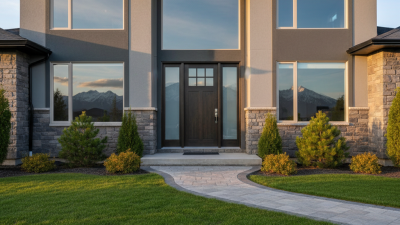
Choosing fancy doors in Edmonton involves more than selecting an impressive finish. The door must suit the home, survive changing seasons, and support everyday comfort. Edmonton’s cold winters, dry indoor air, and sudden temperature shifts can expose weak materials quickly. A beautiful door can still be the wrong door.

Mark Ellison, an Edmonton custom-entry consultant with more than 15 years of residential design experience, says, “The best fancy door balances visual drama with Edmonton’s practical demands.” That balance matters. Consider insulation, frame construction, weather seals, glass performance, security hardware, and installation quality. A carved wood door may create a warm entrance, but it can require more maintenance than fiberglass or steel. Even premium materials need careful fitting.

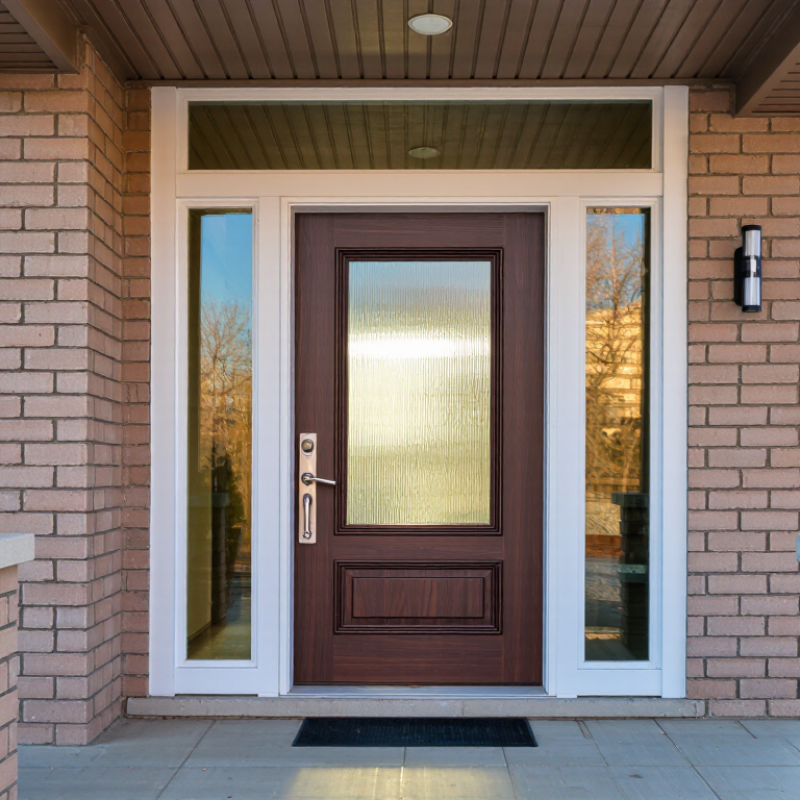
Small details change the experience. Picture a dark walnut finish beside pale brick. Notice how afternoon light passes through textured glass. Feel whether the handle works smoothly with winter gloves. These details often matter more than a showroom photograph.

This guide explores 10 useful tips for choosing fancy doors Edmonton homeowners can enjoy for years. It covers style, durability, energy efficiency, maintenance, sizing, and professional installation. Some choices will feel obvious. Others may deserve a second thought. For example, oversized hardware looks striking, but it may overwhelm a narrow entryway. A bold color feels memorable, yet it can age quickly. Careful planning creates a door that welcomes guests without creating unnecessary problems.
10 Tips for Choosing Fancy Doors in Edmonton?

What Makes a Door “Fancy” for Edmonton Homes?

What Makes a Door “Fancy” for Edmonton Homes?

In Edmonton, a fancy door is more than a glossy finish or oversized handle. It should manage winter cold, dry indoor air, summer heat, and frequent temperature changes. Natural Resources Canada reports that windows, doors, and skylights can cause up to 35% of a home’s heat loss. That figure makes insulation a design feature, not a hidden technical detail.

Look for a thermally insulated core, tight weatherstripping, and a low air-leakage rating. The National Fenestration Rating Council explains that U-factor measures heat transfer through a door assembly. Lower values generally indicate better insulation. A well-fitted frame matters too. Even an expensive door performs poorly when installation leaves gaps around the jamb. I have seen homeowners focus on the slab and overlook the threshold.

Fancy Edmonton doors also use proportion, texture, and controlled glass. A narrow vertical window can bring light into a dark entryway without making the space feel exposed. Laminated or multi-pane glazing may improve comfort and security. Check the complete door assembly, not only the decorative panel. Natural Resources Canada’s ENERGY STAR guidance evaluates performance across climate conditions, which is useful for comparing specifications. Still, numbers do not tell every story. A dramatic black finish may absorb heat, while a complex surface can show dust and scratches. The best choice balances tactile quality, maintenance, energy performance, and the character of the home.

10 Tips for Choosing Fancy Doors in Edmonton? What Makes a Door “Fancy” for Edmonton Homes?

In Edmonton, a sophisticated exterior door should combine visual appeal with cold-weather performance. Insulated cores, reliable weatherstripping, low-maintenance finishes, secure hardware, durable thresholds, and glazing designed for energy efficiency are especially valuable during long, cold winters.

The chart shows rounded monthly mean temperatures for Edmonton, Alberta, based on 1991–2020 Canadian climate-normal data. The wide seasonal range explains why insulation, airtight seals, weather-resistant materials, and durable finishes are essential features of a “fancy” Edmonton door.

How to Choose Weather-Resistant Door Materials

Fancy doors in Edmonton must resist more than cold.

Environment and Climate Change Canada climate normals indicate roughly 4,500–5,000 annual heating degree-days around Edmonton. That means small gaps can become expensive weaknesses.

The U.S. Department of Energy reports that air leakage around windows and doors may represent 10–15% of household heating and cooling energy use.

Check the whole assembly, not only the decorative panel.

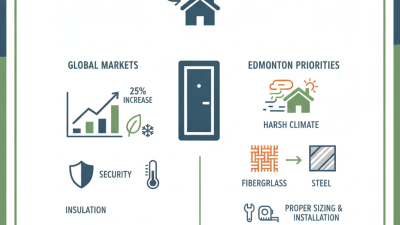
Fiberglass is often a practical choice because it resists moisture, warping, and repeated temperature changes.

Insulated steel doors can provide strong thermal performance, but exposed edges may rust if the coating is damaged. Wood offers warmth and character. It needs more maintenance, especially near snow, salt, and wet entry mats.

Look for:

a low U-factor, continuous weatherstripping, an insulated core, and a thermally improved threshold.

Canadian fenestration guidance uses U-factor as a key measure; lower values generally indicate better insulation.

Installation matters just as much.

A high-performance door can still leak through an uneven frame. Ask the installer to seal the rough opening, slope exterior surfaces away from the wall, and protect the sill from standing water.

ASTM and CSA/WDMA performance standards can help verify air, water, and structural testing. Still, ratings are not magic.

I have seen beautiful doors fail because the threshold was poorly adjusted.

Edmonton homes also need clearance for icy buildup. Measure that space carefully, and inspect seals after the first winter.

How to Match Door Styles with Your Home’s Architecture

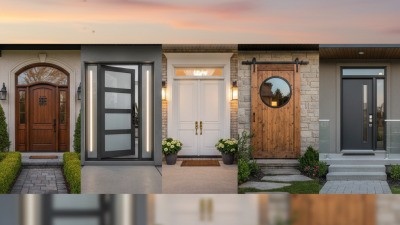
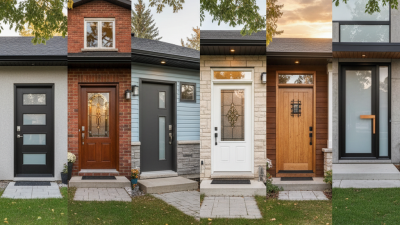
A fancy door should echo your home’s architecture, not compete with it. Study the roofline, window shapes, brickwork, and exterior proportions before choosing a style. Traditional homes often suit raised panels, divided glass, and warm wood tones. Modern houses usually look stronger with flush surfaces, narrow glass panels, and crisp metal details. Prairie-style properties can handle horizontal lines and restrained geometric patterns. Keep the design disciplined.

Edmonton’s changing weather deserves equal attention. Choose an insulated door with dependable weatherstripping and a durable finish. Cold winters can expose weak seals quickly. Glass should support energy efficiency while preserving the intended style. A tall entry door may suit a high-ceilinged façade, but it can look awkward on a compact bungalow. Measure carefully. Scale is easy to overlook. Match the hardware to the architecture, too. A simple lever may suit modern lines, while a heavier pull can complement a craftsman entrance. Sidelights should repeat the door’s geometry, not introduce a random pattern.

Before ordering, view material samples outdoors during cloudy and sunny conditions. Colours can shift dramatically beside stone or painted siding. Consider the porch roof, because deep shadows change how decorative panels appear. In my experience, homeowners often choose ornate glass first, then struggle with privacy and maintenance. That choice deserves a second look. I still question whether “fancy” means elaborate; often, excellent proportion feels more luxurious than decoration. Ask an experienced installer to check the frame, threshold, swing, drainage, and insulation details. A beautiful door performs poorly when installation is treated as an afterthought.

How to Evaluate Security, Energy Efficiency, and Durability

10 Tips for Choosing Fancy Doors in Edmonton?

How to Evaluate Security, Energy Efficiency, and Durability

A stylish door should protect your home, not merely impress visitors. Security starts at the frame. Check whether the frame is firmly anchored, square, and free from movement. A strong slab can still fail when the frame flexes. Look for a reinforced strike area, dependable hinges, and a multi-point locking system. The deadbolt should extend deeply into solid framing. Test the latch several times before buying. It should operate smoothly without forcing the handle. Small gaps matter. Examine the threshold, door sweep, and weatherstripping for continuous contact. Edmonton’s cold winters can expose weak seals quickly.

Energy performance deserves careful attention. Ask for the door’s U-factor and air-leakage information, rather than relying on phrases like “winter-ready.” Lower heat transfer can improve comfort near the entryway. An insulated core helps, but installation remains equally important. Expanding foam, proper shimming, and a sealed sill prevent drafts around the edges. Watch for condensation after installation. It may indicate indoor humidity, poor ventilation, or a cold bridge around the frame. Durability also depends on material and maintenance. Fiberglass resists moisture and temperature changes, while steel offers strong impact resistance but may show dents. Inspect hinges, coatings, and hardware for corrosion protection. I once underestimated the threshold, and winter grit quickly damaged its finish. That mistake was avoidable. Choose proven construction, but inspect every detail yourself.

10 Tips for Choosing Fancy Doors in Edmonton? - How to Evaluate Security, Energy Efficiency, and Durability
# Evaluation Area Practical Benchmark What to Check Before Buying Useful Evidence or Questions
1 Confirm the Door Material Steel and fiberglass doors generally provide better resistance to warping and impact than solid wood in severe temperature changes. Wood can perform well when properly sealed and maintained. Examine the slab, frame, edge construction, finish quality, and moisture protection. For exterior use, avoid exposed untreated end grain and visible gaps in joints. Ask for the material specification, exterior-use rating, finishing requirements, and expected maintenance schedule.
2 Evaluate the Locking System Prefer a properly installed deadbolt with a solid strike area and a lock throw that engages deeply into the frame. A multi-point system can improve resistance to forced entry and reduce air gaps. Check whether the strike plate is secured with long screws into structural framing, not only into the trim. Confirm that the lock operates smoothly without excessive force. Request installation details, lock testing information, and confirmation that the complete door assembly—not just the lock—is designed for exterior security.
3 Inspect the Frame and Hinge Side A strong door slab cannot compensate for a weak, poorly anchored frame. The frame should remain square, plumb, and firmly attached to the surrounding structure. Look for reinforced hinge areas, secure fasteners, even reveal gaps, and a continuous connection between the frame and wall structure. Ask how the frame will be anchored, how many hinge points are used, and whether the installation includes shimming and structural fastening.
4 Compare Thermal Performance Lower U-factor means less heat transfer. For a cold Edmonton climate, compare complete door-system U-factor data rather than relying only on the insulation value of the slab. Review the slab, frame, glass, threshold, and edge-of-glass performance. Pay particular attention to thermal bridges around metal frames and thresholds. Request a documented U-factor or energy-performance rating for the full assembly, including any decorative glass and sidelites.
5 Check Weatherstripping and Air Leakage Continuous, compressible weatherstripping should create an even seal on all sides. A tight threshold and adjustable sweep are important during windy, cold weather. Close the door on a sheet of paper at several points. Consistent resistance suggests contact; loose sections may indicate an air-leakage problem or poor alignment. Ask about replacement weatherstripping, adjustable thresholds, air-leakage testing, and how the door will be sealed to the rough opening.
6 Select Suitable Glazing Double-pane low-emissivity glazing is commonly more efficient than single glazing. Triple glazing can provide additional insulation, but frame design and installation also affect results. Check for low-emissivity coating, insulated glass spacing, warm-edge spacer options, safety glazing where required, and condensation resistance. Request the glazing U-factor, visible-light information, safety-glazing documentation, and details about seal durability.
7 Assess Water and Wind Resistance Exterior doors should have a sloped or properly drained threshold, durable perimeter seals, and a finish suitable for snow, freeze-thaw cycles, and wind-driven moisture. Inspect drainage paths, sill pans or equivalent sill protection, corner joints, threshold transitions, and the bottom edge of the door. Ask for applicable air, water, and structural performance results, plus the recommended method for protecting the rough opening from water intrusion.
8 Review Finish and UV Resistance A high-quality exterior finish should resist peeling, fading, cracking, and moisture absorption. Dark finishes may absorb more solar heat and require appropriate material selection. Look for uniform coating, sealed edges, protected fasteners, and finish coverage on all exposed surfaces. Confirm whether field painting or staining is required. Request written care instructions, refinishing intervals, approved cleaning methods, and finish warranty conditions.
9 Measure Durability and Maintenance Durable hardware should tolerate repeated operation, seasonal movement, and moisture. Hinges, closers, seals, and thresholds are replaceable components that should be serviceable. Operate the door repeatedly, listen for rubbing, verify hinge alignment, and inspect hardware for corrosion resistance. Confirm that replacement parts are available. Ask for hardware cycle information where available, corrosion-resistance details, spare-part availability, and recommended annual maintenance.
10 Verify Installation and Total Cost Correct installation is essential for security, energy efficiency, and durability. Compare the complete installed cost, not only the advertised door price. Include removal, disposal, structural repairs, flashing, insulation, air sealing, trim, hardware, delivery, and future maintenance in the comparison. Request an itemized quotation, installation procedure, warranty responsibilities, expected completion time, and post-installation adjustment service.

How to Compare Costs, Installation, and Long-Term Maintenance

10 Tips for Choosing Fancy Doors in Edmonton

Fancy doors must handle Edmonton’s freeze-thaw cycles, dry air, and strong seasonal temperature changes.

Tip 1: Compare complete installed prices, not showroom prices. Request three written quotes.

Tip 2: Check whether each quote includes framing, shimming, flashing, trim, hardware, disposal, and finishing.

Tip 3: Ask for the door’s U-factor and air-leakage rating. Natural Resources Canada’s energy guidance highlights these measures for efficient fenestration.

Tip 4: Choose weatherstripping that can be replaced easily. Small gaps become expensive drafts.

Tip 5: Separate the door slab, frame, lockset, and installation warranty. They may have different coverage periods.

Tip 6: Ask how installers protect the threshold from Edmonton snow and salt.

Tip 7: Compare maintenance schedules. Wood may need regular refinishing, while composite surfaces usually need simpler cleaning.

Tip 8: Confirm the finish can withstand direct sunlight and winter moisture. Maintenance details matter more than a glossy sample.

The 2024 Cost vs Value Report places steel entry-door replacement at 188.1% cost recouped in its United States benchmark. That is not an Edmonton guarantee. Still, it shows how entry doors can influence perceived value.

Tip 9: Treat that figure as context, not a promise.

Tip 10: Review local references from homes with similar exposure.

One practical admission: choosing the most decorative door can create future repair work. A slightly plainer design may seal better and last longer.

Keep invoices, product ratings, and installation photos. They make future troubleshooting less frustrating.